


Running an online store means constantly looking for ecommerce promotion ideas to win more customers, move more products, and grow revenue.
While the right promotion can do all three, the wrong one can train your customers to wait for a discount before they ever pay full price. That's the tension every merchant has to face.
In this guide, we cover 17 proven promotion ideas, organized by goal, with practical guidance on how to implement each one. Whether you're running a large operation or exploring eCommerce promotion ideas for small businesses, there's a strategy here that fits.
What is an ecommerce promotion?
An ecommerce promotion is any offer or incentive designed to encourage customers to take a specific action, normally to buy, buy more, or buy again. Promotions can take many forms: discounts, free gifts, bundle deals, loyalty rewards, and more.
Ecommerce promotions tend to fall into two categories:
- Proactive promotions: Campaigns that you plan in advance to hit specific goals. For example, getting new customers during a product launch or increasing AOV ahead of a slow season.
- Reactive promotions: You respond to a situation, such as clearing overstock, matching a competitor's offer, or re-engaging customers who haven't purchased recently.
Both types are useful. The key is running them with a clear goal and a plan to measure results.
Why promotions matter for your ecommerce store
Ecommerce promotions do more than just drive short-term sales. When run strategically, they serve several important business functions.
They lower the barrier for first-time buyers. A new visitor to your site is less likely to convert than a returning customer. A well-placed first-purchase discount or free shipping offer can be the nudge that turns a browser into a buyer.
They increase your average order value. Promotions like BOGO deals, volume discounts, and cart upsells encourage customers to spend more each time they buy. You do not need to find new customers to grow revenue.
They help you move inventory. Instead of sitting on slow-moving stock, you can use clearance offers, bundles, or limited-time deals to free up space and recover costs.
They build loyalty. Rewards programs, birthday discounts, and VIP offers give your best customers a reason to keep coming back and to feel appreciated when they do.
💡 The key metric to watch isn't how many customers take part in your promotions. It's whether your promotions generate incremental revenue that they wouldn't have generated otherwise.
17 ecommerce promotion ideas to boost sales
To turn strategy into results, you need the right promotions at the right moments. Below are 17 proven ecommerce promotion ideas you can use to drive more conversions and increase order value.
BOGO (Buy One, Get One) deals

BOGO offers are among the most psychologically powerful promotions in ecommerce. Customers feel they're getting genuine value, and you move more units per transaction.
BOGO works well for consumables and complementary items. If you sell skincare, for example, a "buy a cleanser, get a toner at 50% off" offer pairs naturally.
On Shopify, you can set up BOGO deals through native discount rules for simple setups, or use an app like Qikify Upsell BOGO & Free Gift for more flexibility.
Free gift with purchase

Offering a free gift when customers reach a spending threshold is a simple way to increase AOV. It also makes customers feel more appreciated compared to a plain discount. A gift feels generous and unexpected, while a price cut can lower how people see your brand over time.
Choose gifts that are useful and match what customers are already buying. A skincare brand might offer a travel-size product, while an apparel store could offer branded socks or a tote.
The key is to keep the offer visible, no matter which free gift with purchase strategies you use on Shopify.
Volume and tiered discounts

Volume discounts reward customers for buying more. The classic structure is tiered pricing: "Buy 2, save 10%; buy 4, save 20%; buy 6, save 30%." This structure increases AOV naturally, because customers see exactly what they'd save by adding more items.
Volume discounts work best for products that people buy in multiples. They also suit wholesale or B2B customers who order in bulk. However, make sure to set the volume discount pricing formulas carefully, so you protect your margins and still offer a strong incentive.
Flash sales with countdown timers

A flash sale is a short-duration discount, typically 24–72 hours, that creates urgency and drives quick conversions.
They work because scarcity and time pressure are two of the most reliable drivers of buyer behavior. Customers who might have put off a purchase suddenly have a reason to act now.
Flash sales are most effective when used sparingly. Run them too often, and customers learn to wait for them. Run them at the right moment, and you can re-engage inactive customers, clear seasonal inventory, or celebrate a milestone.
To maximize impact, pair a flash sale with a countdown timer on your homepage, product page, and in a promotional bar. This keeps the urgency visible at every point of the shopping experience.
Cart upsell offers

A cart upsell shows a relevant or complementary product to a customer who's already added something to their cart. Because the customer has already had a buying intent, cart upsells convert at a higher rate than most other cross-sell touchpoints.
To master Shopify upsells, the key is relevance. The offer needs to make sense given what's already in the cart. A customer buying a camera might respond very well to a camera bag, an extra memory card, or a cleaning kit.
Free shipping thresholds

Free shipping is one of the top reasons customers complete a purchase. It is also one of the top reasons they abandon their cart.
Setting a free shipping threshold (e.g., free shipping on orders over $50) gives customers a concrete incentive to add one more item rather than leave.
The trick is setting the threshold just above your current average order value. If your AOV is $42, set the threshold at $55. Use a dynamic shipping bar in the cart, like "Add $13 more for free shipping", to show customers how close they are. This small prompt is one of the easiest ways to increase AOV with no discount at all.

Exit-intent popups with a discount

An exit-intent pop-up appears when a visitor moves their cursor toward the tab or back button, showing they are about to leave without buying. If you present a targeted offer at that moment, such as 10% off, a free gift, or free shipping, you can recover a good share of that lost traffic.
Exit-intent popups are especially effective for first-time visitors who haven't committed to your brand yet. They're less appropriate for loyal customers who already know your pricing. Keep the copy short and the CTA clear.
Promotion bars and announcement bars

A promotion bar is a thin strip at the top of your store. It stays visible on every page and highlights your current offer. For example, it might say "Free shipping on orders over $50" or "20% off sitewide, ends Sunday."
A promotion bar keeps your offer in front of customers at all times. Even if they do not scroll down to your homepage banner, they will still see it. It is easy to set up and built to stand out.
First-purchase welcome discount

A welcome discount is one of the most effective ways to attract new customers in e-commerce. It usually offers 10 to 15 percent off a first order in exchange for an email signup. This helps you grow your email list while making it easier for new visitors to buy.
To get the best results, make the offer feel exclusive. For example, "Welcome to the club. Enjoy 15% off your first order" works better than a generic "10% off." Show the offer in a pop-up after a visitor spends 10 to 15 seconds on your site. If it appears too soon, it can feel intrusive.
Around 30% of visitors who sign up for a discount code will buy right away. Others may return later through your email follow-ups.
Referral program discounts

Referral programs reward customers for bringing in new ones. A common setup looks like this: the existing customer gets $10 or 15% off their next order, and the new customer gets a discount on their first purchase. Both sides benefit, and you gain new customers through word of mouth instead of paid ads.
Referral programs work best when they are easy to find and easy to share. Create a dedicated page, include a referral link in post-purchase emails, and remind customers about it at checkout. The best programs should feel like a helpful recommendation, not a sales pitch.
Email signup pop-up offer

Not every email signup needs to lead to a purchase right away. You can offer a lead magnet such as a discount, a free guide, early access to a sale, or a free gift in exchange for an email address. This helps you grow your list, even if visitors are not ready to buy yet.
In ecommerce, your email list is a valuable asset. Each email you collect gives you a direct way to reach potential customers. Even if someone does not buy at first, a well-planned email sequence can turn them into a customer over time.
Loyalty rewards program

A points-based loyalty program or store credit lets customers earn rewards for every purchase. They can redeem what they have for discounts, free products, or other perks. The structure creates a habit loop: buy, earn points, redeem, and repeat.
Loyalty programs work best for products people buy again and again, such as coffee, supplements, skincare, and pet supplies. For one-time purchases, you may need different reward types, like early access to new products or special member pricing. Track your repeat purchase rate before and after you launch the program to measure its impact.
Birthday and anniversary discounts

Sending a personalized birthday discount, such as 15% off, a free gift, or free shipping, helps customers feel recognized and valued. According to Omnisend, birthday emails achieve an average open rate of 43.3% and a conversion rate of 14.3%, far above typical promotional emails.
The setup is simple: Collect a customer's birthday when they sign up or create an account. Then, send an automated discount email a few days before the date. Timing matters, so send it early enough for them to plan a purchase.
VIP and member-only deals

Segment your most loyal customers into a VIP group and give them special perks. This can include early access to sales, member-only pricing, or a unique discount code. These benefits make customers feel valued and strengthen their connection to your brand.
You do not need a complex points system to run a VIP program. A simple email flow can work well. Tag high-spend customers and send them exclusive offers before a sale goes public. This small step can improve customer retention.
Holiday and seasonal sales

Black Friday, Cyber Monday, Valentine's Day, Back to School, and Mother's Day are all strong moments for seasonal promotions. Shoppers are already ready to spend during these times. Your job is to present the right offer at the right moment.
Plan your campaigns 4 to 6 weeks in advance. Create a clear schedule with teaser emails, a launch offer, a mid-campaign reminder, and a final push before the deadline. Keep your message consistent across your promotion bar, homepage, and email flows.
You can run automatic discounts during these periods using Shopify's built-in automatic discount tools or apps with more advanced scheduling features.
Product bundle deals

A product bundle groups two or more related items and sells them at a lower price than buying each one separately. Bundles can raise your average order value, introduce customers to new products, and make the offer feel like a better deal.
Bundles work best when the items fit well together and still leave you a healthy margin. A "starter kit" or "complete set" works well for beauty, food, home goods, and apparel. Show the savings clearly, such as "Buy the bundle and save $12," so customers can see the value right away.
Limited-time and mystery offers

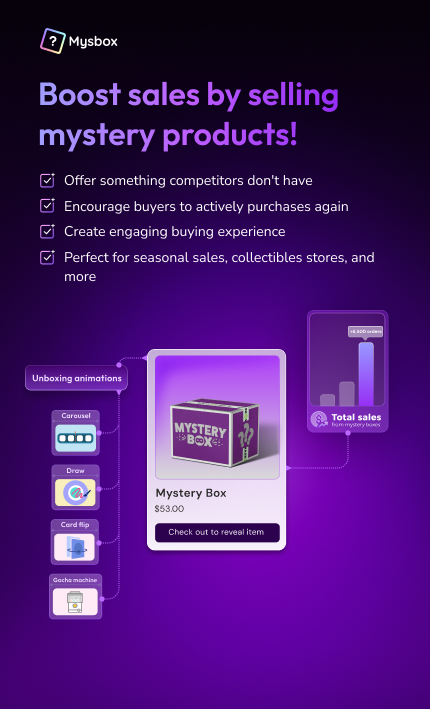
Curiosity is a strong driver of conversions. A mystery discount lets customers reveal their offer by clicking a button or entering their email. This adds a sense of surprise and often drives more engagement than a simple percentage off.
Limited-time offers can create urgency, even without a holiday or event. A "this weekend only" deal gives hesitant shoppers a reason to act. Keep these offers truly limited. If a "48-hour sale" repeats every week, customers will stop trusting it.
How to choose the right promotion for your store
Not every promotion fits every situation. Here's a simple framework for matching the tactic to your goal. These online store discount strategies will help you prioritize where to focus first.
If you want to acquire new customers, start with a first-purchase welcome discount, referral program, or email signup offer. These are designed to lower the conversion barrier and build your list simultaneously.
If your focus is to increase AOV, focus on volume discounts, free shipping thresholds, cart upsells, and BOGO deals. These get existing buyers to spend more per order without requiring new customer acquisition.
If your goal is to move inventory, use flash sales, clearance bundles, and BOGO offers on the products you need to clear.
If you decide to improve retention, invest in a loyalty program, birthday discounts, and VIP offers. Segment your best customers and give them a reason to feel recognized.
Tips to run promotions without hurting your margins
Ecommerce marketing promotions can get expensive if you are not careful. Follow a few key principles below to protect your profit.
Set a clear goal before you launch. Every eCommerce promotional strategy should have a defined metric: A target number of orders, a specific revenue figure, or an email list growth number. Without a goal, you can't evaluate whether it worked.
Know your margin before you set your discount. A 20% discount on a product with a 30% margin leaves very little room. Build your discount from the margin up, not from a round number you pulled from a competitor's campaign.
Track performance by promotion type. Over time, you will see which ones bring the best return for your audience. The best Shopify discount apps include built-in analytics, so you can track redemption rates and revenue for each campaign with ease. Knowing how to run promotions on Shopify effectively means using this data to cut what doesn't work and double down on what does.
Final words
Ecommerce promotions are not just about lowering prices. The best ones create real value for customers. They make people feel rewarded, surprised, or like they found something special. Poor promotions do the opposite. They train customers to wait for discounts and avoid paying full price.
The 17 ideas above cover every stage of the customer journey, from getting new visitors to increasing order value and building loyalty. You do not need to use all of them. Start with two or three that match your current goal. Set them up properly on Shopify and track the results before adding more.
FAQs
What are the 7 C's of e-commerce?
The 7 C's of e-commerce include context, content, community, customization, communication, connection, and commerce that define a successful digital business strategy.
How often should I run promotions?
There's no universal answer, but most successful ecommerce stores run targeted promotions tied to specific goals or seasons.
What's the difference between a discount and a promotion?
A discount is a simple price cut. A promotion is broader. It includes discounts, but also covers free gifts, loyalty rewards, referral incentives, contests, and other added-value offers.
What are the 5 P's of promotion?
The 5 P's of promotion include product, price, promotion, place, and people. They form the essential framework for a successful integrated marketing communications strategy.
What is a flash sale in ecommerce?
A flash sale is a short-duration discount offer, running for 24–72 hours, designed to create urgency and drive quick conversions. They work best when used selectively, not as a constant tactic.